Automotive Applications Guide
Complete guide to metallographic analysis for automotive applications, covering steel and aluminum processing verification, heat treatment validation, weld quality assessment, and industry-specific quality requirements.
Table of Contents
Introduction to Automotive Metallography
Metallography plays a critical role in the automotive industry, where material quality, performance, and reliability directly impact vehicle safety and longevity. Automotive components must withstand extreme conditions including cyclic loading, temperature variations, and environmental exposure, making thorough metallographic analysis essential for quality assurance and process validation.
This guide covers the specialized metallographic techniques and considerations required for automotive applications, focusing on the most common materials (steel and aluminum), critical processes (heat treatment and welding), and industry-specific quality requirements that ensure components meet automotive standards.
Key Applications: Quality control in manufacturing, process validation, failure analysis, material certification, and compliance with automotive industry standards such as ISO/TS 16949 and ASTM specifications.
Steel and Aluminum Processing Verification
Steel Processing Verification
Automotive steel components require verification of processing parameters to ensure proper microstructure development. Key aspects include:
Grain Size Analysis
Grain size directly affects mechanical properties in automotive steels. Proper grain size control ensures optimal strength, toughness, and formability. Use ASTM E112 for grain size measurement and verify that grain sizes meet specification requirements (typically ASTM grain size numbers 5-8 for most automotive applications).
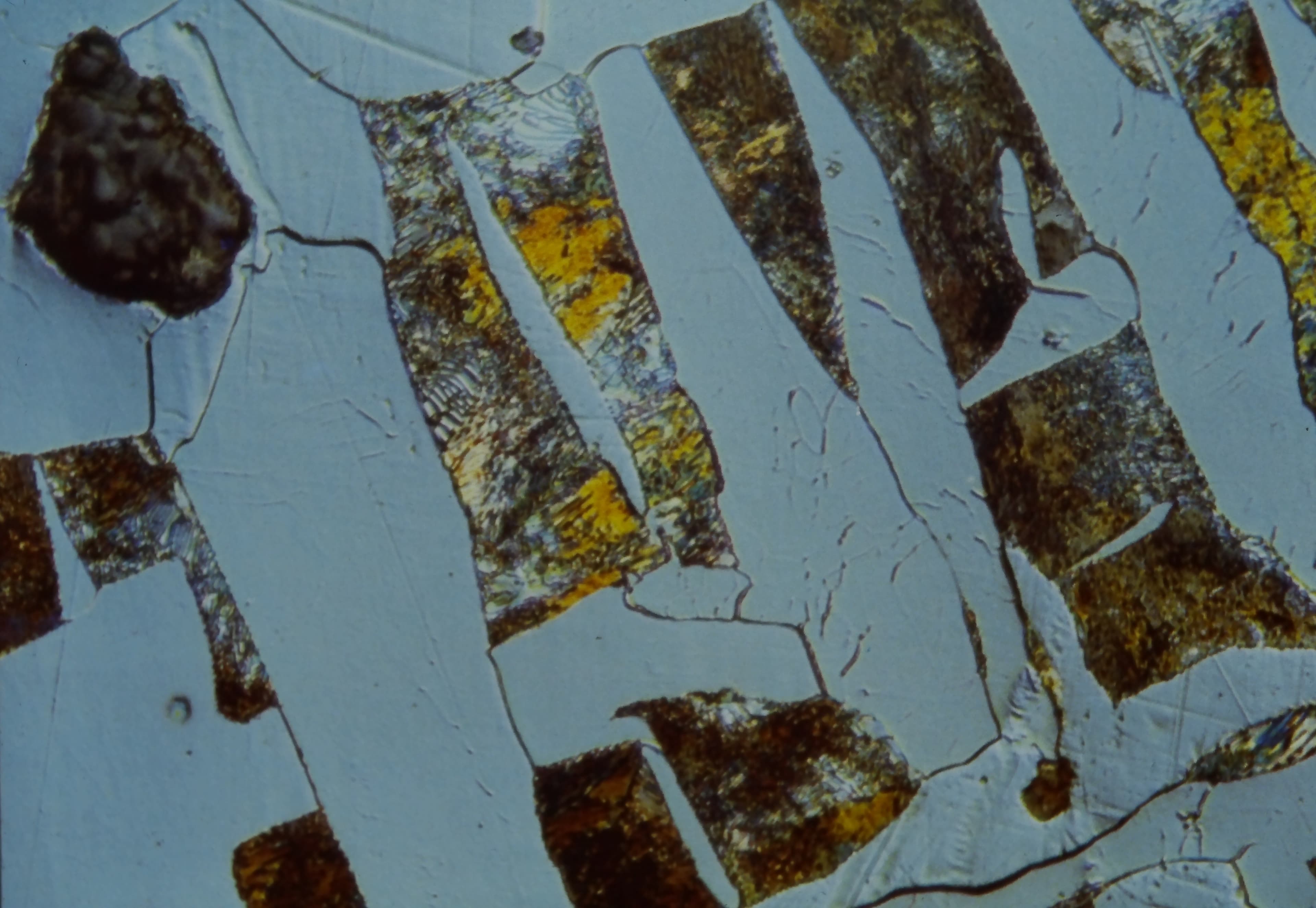
Carbon steel microstructure showing ferrite and pearlite. Proper grain size control is critical for automotive component performance.
- Measure grain size at multiple locations to ensure uniformity
- Document any grain size gradients from surface to interior
- Compare measured values against material specifications
- Use appropriate etching (e.g., nital for carbon steels, picral for some alloy steels)
Inclusion Assessment
Non-metallic inclusions can significantly impact fatigue life and formability. Automotive specifications often require inclusion rating per ASTM E45 or ISO 4967:
- Type A (sulfides): Assess stringer length and distribution
- Type B (aluminates): Evaluate size and clustering
- Type C (silicates): Check for stringer formation
- Type D (globular oxides): Measure size and frequency
Maintain unetched samples for inclusion analysis, as etching can obscure inclusion details. Use brightfield illumination and document worst-field ratings as specified.
Microstructure Verification
Verify that the expected microstructure is present based on processing:
- Hot-rolled steels: Check for proper ferrite-pearlite distribution
- Cold-worked materials: Assess deformation structure and recrystallization
- Dual-phase steels: Verify martensite distribution in ferrite matrix
- TRIP steels: Confirm retained austenite presence and distribution
- Bainitic steels: Validate bainite morphology and absence of unwanted phases
Aluminum Processing Verification
Aluminum alloys are increasingly used in automotive applications for weight reduction. Common automotive alloys include 6061 and 7075. Verification focuses on:

Aluminum-silicon alloy, Keller's reagent, 400X magnification. Proper grain structure is essential for automotive aluminum components.
Grain Structure Analysis
Aluminum grain structure affects formability and mechanical properties. Use anodizing techniques (e.g., Barker's reagent) or polarized light to reveal grain boundaries:
- Measure grain size per ASTM E112
- Assess grain shape (equiaxed vs. elongated)
- Check for grain size uniformity across the section
- Document any abnormal grain growth
Precipitate Distribution
For heat-treatable aluminum alloys (2xxx, 6xxx, 7xxx series), verify precipitatedistribution and size:
- Use appropriate etching (e.g., Keller's reagent, Weck's reagent)
- Assess precipitate size and distribution uniformity
- Check for overaging or underaging conditions
- Document precipitate-free zones (PFZ) at grain boundaries
Intermetallic Phase Identification
Identify and assess intermetallic phases that affect properties:
- Fe-rich phases (Al3Fe, Al6Fe): Check size and distribution
- Si particles: Assess morphology and size in cast alloys
- Mg2Si: Verify in 6xxx series alloys
- Document any coarse or undesirable intermetallics
Processing Defects
Check for common processing-related defects:
- Porosity in cast components
- Oxide inclusions from casting or welding
- Recrystallization issues in wrought materials
- Texture effects from rolling or extrusion
Heat Treatment Validation for Automotive Components
Heat treatment validation is critical for automotive components where mechanical properties must meet strict specifications. Proper metallographic analysis confirms that heat treatment processes have been executed correctly.
Case Hardening Verification
Many automotive components undergo case hardening (carburizing, nitriding, carbonitriding) to achieve hard surfaces with tough cores:
Case Depth Measurement
Measure case depth per SAE J423 or ISO 2639, typically with a microhardness traverse per ASTM E384:
- Prepare perpendicular cross-sections through the case
- Use appropriate etching to reveal case/core boundary
- Measure effective case depth (to 50 HRC for carburized cases)
- Measure total case depth (to base carbon content)
- Document case depth uniformity around the component
Etching for case depth: Use nital (2-4%) for carburized steels. The case will appear darker due to higher carbon content. For nitrided cases, use nital or specialized etchants to reveal the compound layer and diffusion zone.
Case Microstructure Evaluation
Assess case microstructure quality:
- Carburized cases: Check for proper martensite structure, retainedaustenite content (should be <20% typically), and absence of carbides at grain boundaries
- Nitrided cases: Evaluate compound layer thickness and uniformity, diffusion zone depth, and absence of porosity
- Carbonitrided cases: Verify proper case structure and depth uniformity
Decarburization Detection
Check for surface decarburization that can reduce case hardness:
- Prepare cross-sections perpendicular to the surface
- Use nital etching to reveal decarburized layer (appears as ferrite)
- Measure decarburization depth per ASTM E1077
- Document and compare against specification limits
Quenching and Tempering Validation
For quenched and tempered steels, verify proper transformation:
Martensite Structure
- Verify complete transformation to martensite (no retained austenite or bainite)
- Assess martensite packet size and distribution
- Check for proper prior austenite grain size
- Document any untempered martensite in tempered samples
Tempering Verification
- Confirm proper tempering (no untempered martensite)
- Assess carbide precipitation and distribution
- Verify absence of overtempering (excessive carbide coarsening)
- Check for temper embrittlement in susceptible alloys
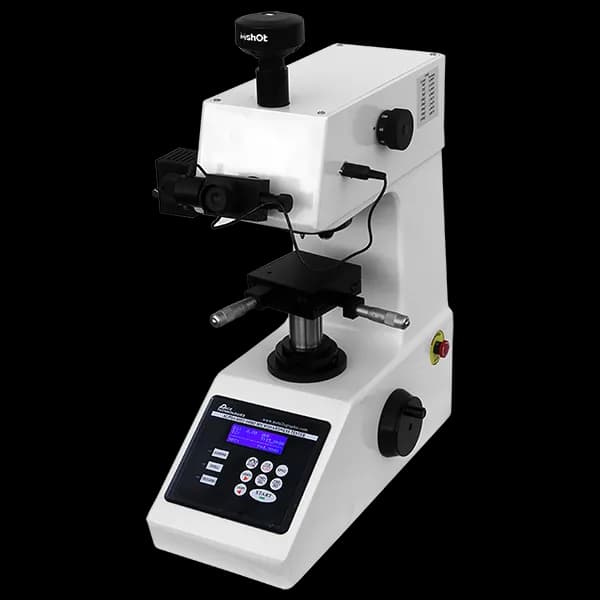
Microhardness tester for case depth measurement. Essential equipment for validating heat treatment in automotive components.
Example Products: Microhardness TestersEssential for case depth measurement and heat treatment validation
For purchasing options and product specifications, see commercial supplier website.
Induction Hardening Validation
For induction-hardened components (common in automotive):
- Measure hardened depth (to 50 HRC typically)
- Assess hardness transition zone
- Verify uniform case depth around the component
- Check for overheating (grain growth) or underheating (incomplete transformation)
- Document any soft spots or non-uniform hardening
Heat Treatment Defects
Identify common heat treatment defects:
- Overheating: Excessive grain growth, visible at high magnification
- Burning: Grain boundary melting or oxidation
- Incomplete transformation: Presence of ferrite or pearlite in quenched samples
- Quench cracks: Cracks originating from surface, often intergranular
- Distortion: Assess through dimensional measurements and microstructure uniformity
Weld Quality Assessment in Automotive Manufacturing
Welding is extensively used in automotive manufacturing for body-in-white construction, chassis components, and exhaust systems. Metallographic analysis ensures weld quality and identifies potential failure sites.
Weld Zone Preparation
Proper sample preparation is critical for weld analysis:
- Section perpendicular to the weld direction to reveal full weld profile
- Include base metal, heat-affected zone (HAZ), and weld metal in the section
- Prepare multiple sections if assessing weld uniformity
- Use appropriate mounting to preserve weld geometry
Weld Metal Evaluation
Assess weld metal microstructure and quality:
Microstructure Analysis
- Steel welds: Evaluate ferrite content, grain structure, and inclusion distribution
- Aluminum welds: Assess grain structure, porosity, and intermetallic formation
- Check for proper solidification structure (columnar vs. equiaxed grains)
- Identify any undesirable phases or structures
Weld Defects
Identify and document weld defects:
- Porosity: Gas pores, assess size, distribution, and location
- Inclusions: Slag inclusions, oxide films, assess size and location
- Cracks: Hot cracks, cold cracks, assess location and orientation
- Incomplete fusion: Lack of fusion between weld passes or base metal
- Incomplete penetration: Insufficient weld penetration
- Undercut: Groove at weld toe, measure depth
Heat-Affected Zone (HAZ) Analysis
The HAZ is often the weakest region in welded joints:
HAZ Microstructure
- Identify different HAZ regions (coarse-grained, fine-grained, intercritical, subcritical)
- Assess grain size changes compared to base metal
- Evaluate phase transformations in the HAZ
- Check for grain growth in coarse-grained HAZ
HAZ Hardness
Perform microhardness traverses across the weld:
- Measure hardness from base metal through HAZ to weld metal
- Identify hardness peaks or valleys
- Compare against specification requirements
- Document hardness profiles for process validation
Fusion Boundary Assessment
Evaluate the fusion boundary between weld and base metal:
- Assess fusion line continuity
- Check for lack of fusion defects
- Evaluate microstructure transition
- Identify any brittle phases at the interface
Weld Quality Standards
Automotive welding often follows standards such as:
- AWS D1.1/D1.1M (Structural Welding Code)
- ISO 13919 (Electron and laser beam welded joints)
- ISO 15614 (Specification and qualification of welding procedures)
- Customer-specific automotive welding standards
Document findings according to applicable standards and maintain records for quality certification and traceability.
Industry-Specific Quality Requirements
Automotive metallography must comply with industry standards and customer-specific requirements. Understanding these requirements ensures proper analysis and documentation.
ISO/TS 16949 Requirements
ISO/TS 16949 (now IATF 16949) is the quality management standard for automotive suppliers:
- Requires documented metallographic procedures
- Mandates proper equipment calibration and maintenance
- Requires trained and qualified personnel
- Emphasizes traceability and documentation
- Requires statistical process control (SPC) for critical characteristics
ASTM Standards for Automotive Applications
Common ASTM standards used in automotive metallography:
- ASTM E3: Preparation of metallographic specimens
- ASTM E112: Determining average grain size
- ASTM E45: Determining the inclusion content of steel
- ASTM E1077: Estimating the depth of decarburization of steel specimens
- ASTM E384: Microindentation hardness testing
- ASTM E562: Determining volume fraction by systematic manual point count
- ASTM E1245: Determining the inclusion or second-phase constituent content of metals by automatic image analysis
Material Specifications
Automotive materials must meet specific specifications:
Steel Specifications
- SAE J standards for automotive steels
- Customer-specific material specifications
- Microstructure requirements (grain size, phase content, inclusion ratings)
- Hardness and mechanical property requirements
Aluminum Specifications
- AA (Aluminum Association) specifications
- Customer-specific requirements
- Grain size and structure requirements
- Precipitate and intermetallic phase limitations
Documentation Requirements
Proper documentation is essential for automotive quality systems:
- Maintain detailed sample preparation records
- Document all measurements and observations
- Include high-quality micrographs with proper magnification and scale bars
- Maintain traceability from sample to report
- Follow customer-specific reporting formats
- Archive samples and documentation per retention requirements
Quality Control Procedures
Implement robust quality control procedures:
- Regular calibration of equipment (hardness testers, microscopes, measuring devices)
- Proficiency testing and interlaboratory comparisons
- Standard reference materials for validation
- Regular review of procedures and methods
- Training and certification of personnel
Customer-Specific Requirements
Many automotive customers have specific requirements:
- Customized sample preparation procedures
- Specific etching requirements
- Unique measurement and reporting formats
- Special documentation or certification needs
- On-site audit requirements
Always verify customer-specific requirements before beginning analysis and maintain clear communication throughout the process.
Sample Preparation Considerations
Automotive sample preparation requires attention to detail to ensure accurate analysis and compliance with standards.
Sectioning
Sectioning is the first critical step in automotive sample preparation:
- Use appropriate cutting methods to minimize damage
- For case-hardened samples, ensure sectioning doesn't affect case depth measurement
- For welds, section perpendicular to weld direction
- Document sectioning location and orientation
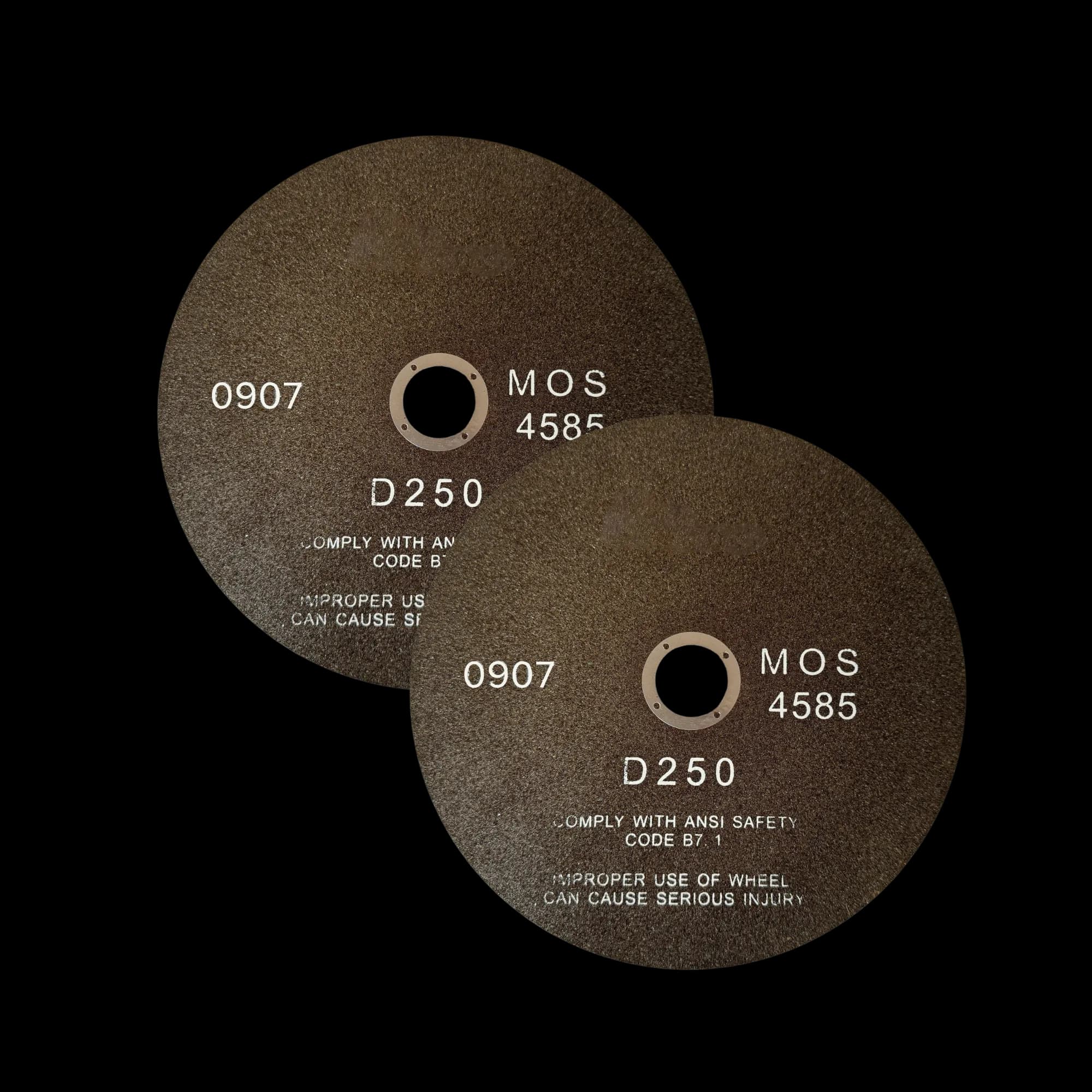
Medium resin-bonded Al₂O₃ abrasive blades for sectioning general automotive steels; step up to a hard-bond Al₂O₃ blade for hardened or case-hardened components (HRC > 45). Proper blade selection minimizes damage and preserves microstructure.
Mounting
Mounting provides edge retention and easier handling:
- Use compression mounting for most automotive samples
- Consider castable mounting for delicate or complex geometries
- Ensure mounting preserves edges for case depth or coating analysis
- Use appropriate mounting materials (conductive for SEM work, glass-filled epoxy for the best edge retention, transparent when sample orientation must stay visible)
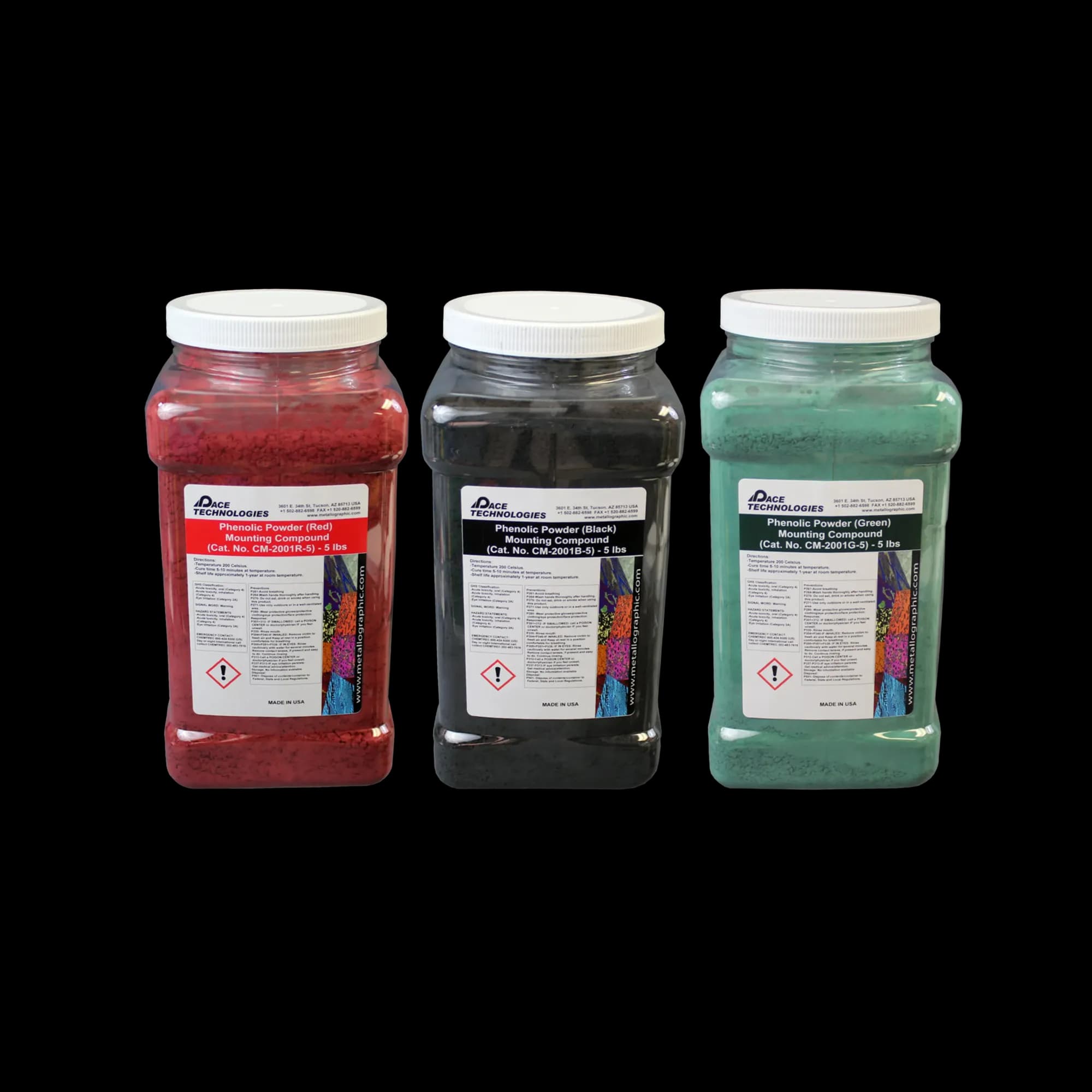
Phenolic mounting resin is an economical general-purpose choice for automotive samples. For critical case-depth and near-edge work, glass-filled epoxy compression mounts give the best edge retention.
Example Products: Mounting ResinsPhenolic and epoxy resins for compression mounting of automotive samples
For purchasing options and product specifications, see commercial supplier website.
Grinding and Polishing
Progressive grinding and polishing remove damage and prepare surfaces:
- Follow standard progressive grinding procedures
- Use appropriate polishing media (diamond for most materials)
- For aluminum, use careful polishing to avoid smearing
- For case-hardened samples, ensure flat surfaces for accurate depth measurement
- Maintain consistent preparation across all samples in a batch
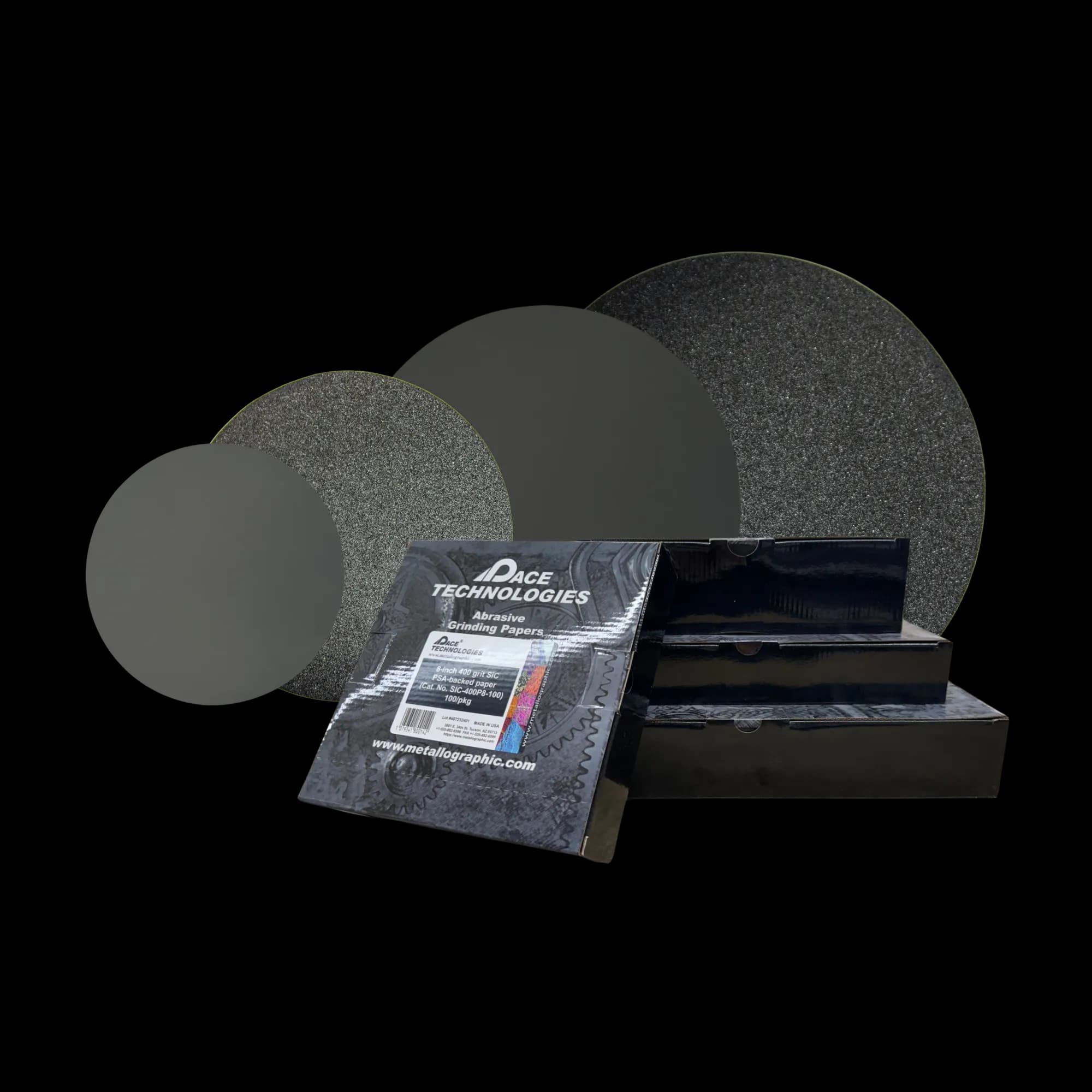
Silicon carbide grinding papers for progressive grinding. Essential for removing sectioning damage in automotive samples.
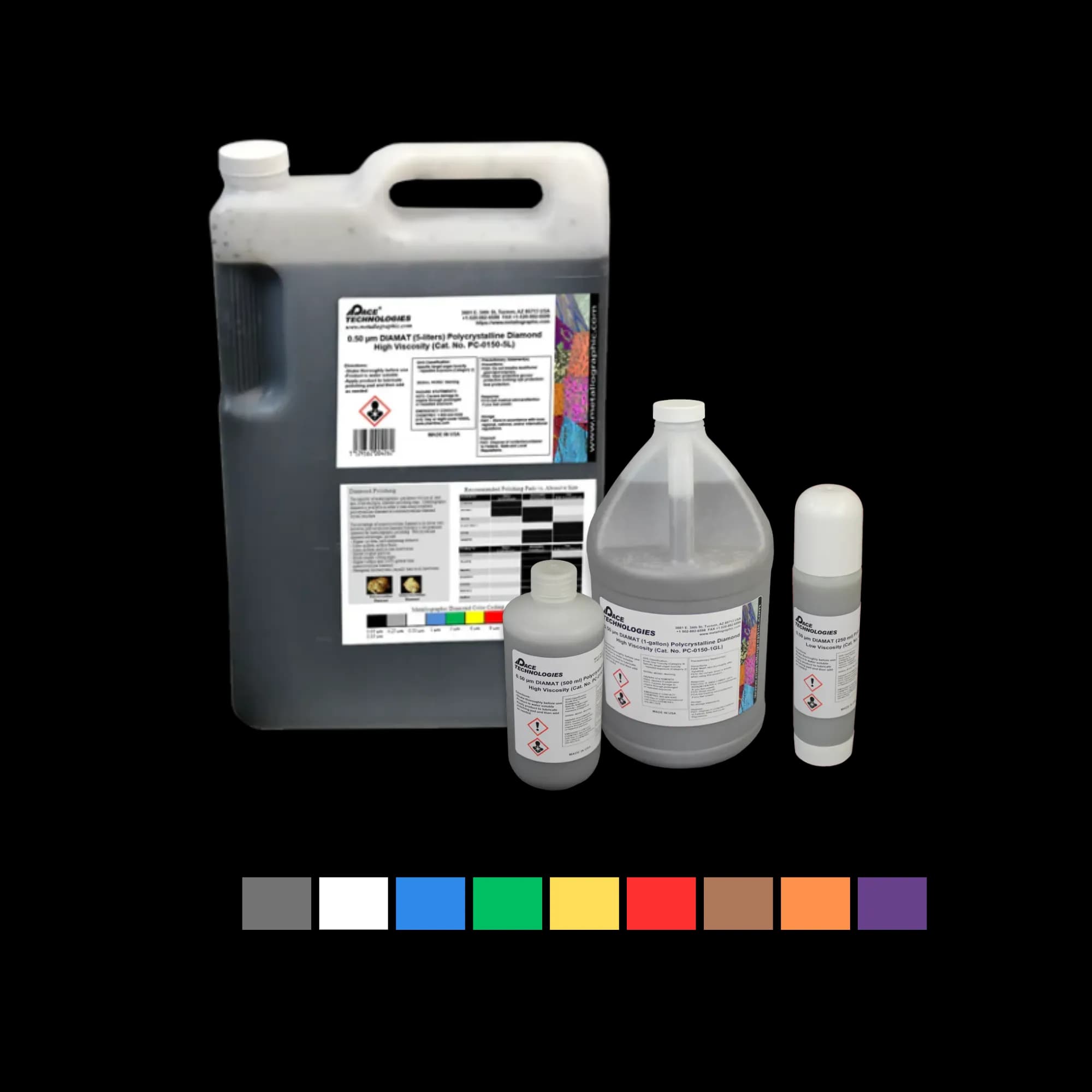
Diamond polishing compounds for fine polishing. Essential for achieving scratch-free surfaces in automotive metallography.
Etching
Select appropriate etchants based on material and analysis requirements:
- Carbon steels: Nital (2-4%) for general microstructure
- Alloy steels: Picral, nital, or specialized etchants
- Aluminum: Keller's reagent, Barker's reagent (anodizing), or Weck's reagent
- Case depth: Nital for carburized cases, specialized etchants for nitrided cases
- Inclusions: Keep samples unetched for inclusion analysis
Example Products: Etching ReagentsChemical etchants for revealing microstructures in automotive materials
For purchasing options and product specifications, see commercial supplier website.
Standards and References
ASTM Standards
- ASTM E3 - Standard Practice for Preparation of Metallographic Specimens
- ASTM E112 - Standard Test Methods for Determining Average Grain Size
- ASTM E45 - Standard Test Methods for Determining the Inclusion Content of Steel
- ASTM E1077 - Standard Test Methods for Estimating the Depth of Decarburization of Steel Specimens
- ASTM E384 - Standard Test Method for Microindentation Hardness of Materials
- ASTM E562 - Standard Test Method for Determining Volume Fraction by Systematic Manual Point Count
ISO Standards
- ISO 4967 - Steel - Determination of content of non-metallic inclusions - Micrographic method using standard diagrams
- ISO 2639 - Steels - Determination and verification of the depth of carburized and hardened cases
- ISO 643 - Steels - Micrographic determination of the apparent grain size
- IATF 16949 - Quality management system requirements for automotive production
Welding Standards
- AWS D1.1/D1.1M - Structural Welding Code - Steel
- ISO 13919 - Electron and laser beam welded joints
- ISO 15614 - Specification and qualification of welding procedures for metallic materials
Additional Resources
- SAE J Standards for automotive materials
- Customer-specific automotive material and process specifications
- Industry best practices and technical papers
Conclusion
Metallographic analysis in automotive applications requires specialized knowledge of materials, processes, and industry standards. Proper verification of steel and aluminum processing, validation of heat treatment procedures, assessment of weld quality, and compliance with industry-specific requirements ensures that automotive components meet the demanding performance and safety standards required in modern vehicles.
By following standardized procedures, maintaining proper documentation, and staying current with industry requirements, metallographers contribute to the quality and reliability of automotive components that millions of people depend on every day.
Key Takeaways: Always verify customer-specific requirements, maintain detailed documentation, follow applicable standards, and ensure proper sample preparation for accurate analysis. Quality in automotive metallography directly impacts vehicle safety and performance.