Pull-Out vs. Real Porosity — Reading the Pit, Not Just Counting Pits
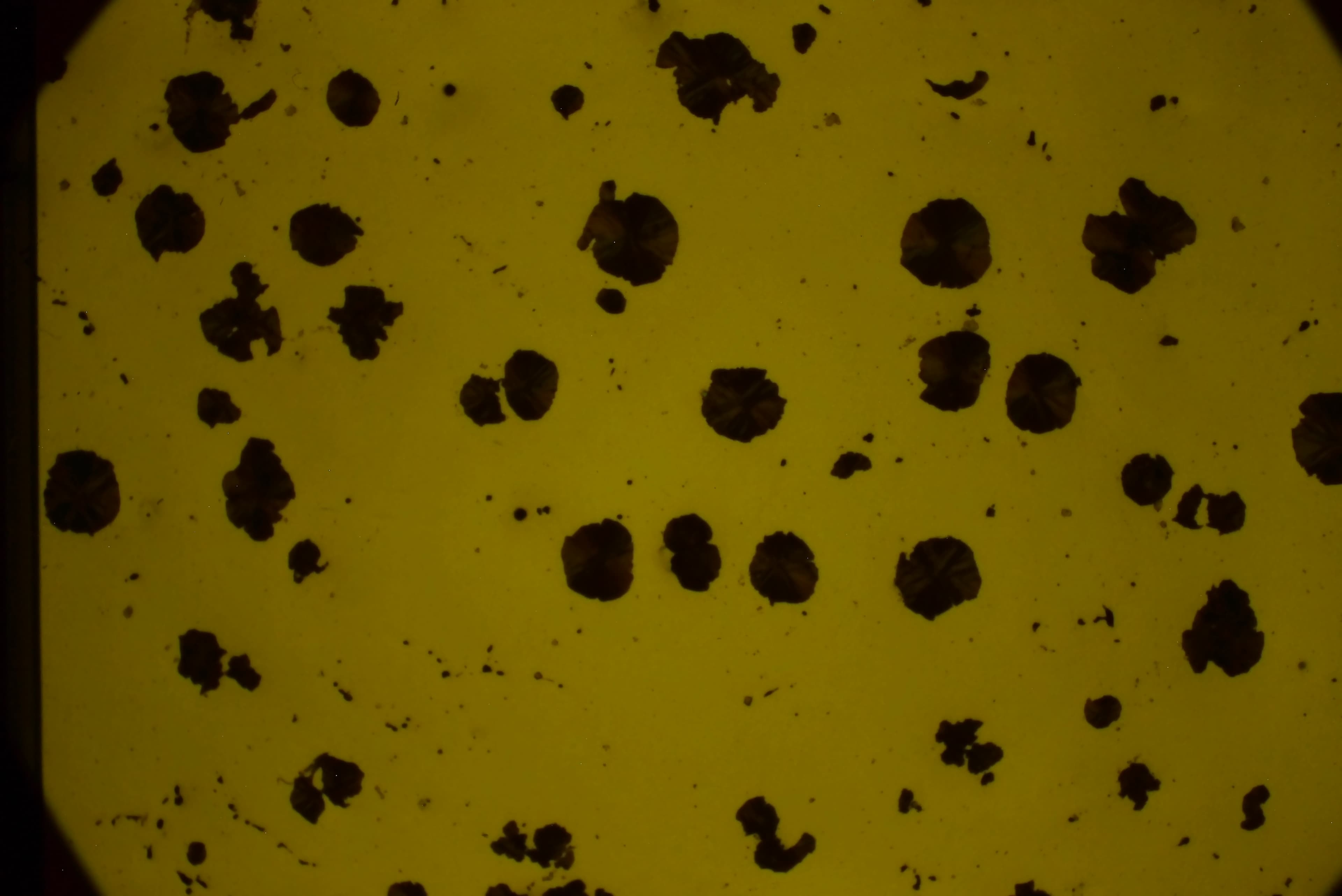
You polish a cast iron sample and see a scatter of pits across the surface. Are they porosity from the casting (a real defect), or are they pull-out from polishing where graphite nodules used to be (an artifact)? The difference matters: reporting prep artifacts as porosity will get a perfectly good casting rejected; the inverse will pass a defective one.
The same question comes up in:
- Cast irons and other graphite-containing alloys
- Sintered powder metallurgy parts
- Welds with slag inclusions
- MMCs where reinforcement particles can pull free
- Composites where fibers can pull from the matrix
- Thermal spray coatings with their lamellar splat structure
The diagnostic test
Look at the pit walls under high magnification, ideally with DIC or oblique illumination.
- Smooth, rounded walls → real porosity. Solidification shrinkage, gas porosity, and intentional sintered porosity all show smooth pit walls because the void existed in the original sample as a free surface (or close to one). The morphology can be spherical (gas), interconnected (sintering), or shrinkage-dendritic, but the walls are not freshly fractured.
- Irregular, fresh-fracture walls → pull-out. A particle that ripped out of the matrix during polishing leaves a jagged crater with sharp edges and a distinct color or texture difference from the surrounding matrix. The crater shape often shows the original particle outline.
- Pits aligned with where graphite or inclusions should be → pull-out. If you see no graphite where ASTM A247 says you should, the graphite was there and got pulled out.
Confirming with the unetched view
When in doubt, examine the sample unetched first. Real porosity is visible as voids on the as-polished surface. Pull-out craters are also visible but often have a different shape and surface texture than real porosity. The unetched view is also the only valid view for graphite morphology rating per ASTM A247 — etching attacks the matrix and changes apparent graphite shape.
The fix for pull-out
Once you confirm pull-out is happening:
- Lower force throughout grinding. Cast iron especially — drop to 15–20 N from 25–30 N.
- Vacuum-impregnate the sample. If the casting has pre-existing porosity, the resin fills the pores and supports surrounding features during polishing. Mandatory for sintered iron.
- Final polish with colloidal silica only. The 1 µm diamond step is the most aggressive at ripping graphite or inclusions free. Sometimes you can skip 1 µm diamond entirely, going from 3 µm directly to colloidal silica on a chemotextile pad.
- Shorter polish times. Each second past the minimum risks pull-out. For nodular cast iron the recommendation is 2 minutes maximum at colloidal silica.
- Hard pads only at the small grit sizes. Soft pads conform around protruding hard particles and grip them.
Don''t over-polish
This is the most consistent piece of advice across cast iron, sintered metals, and composites: do not extend polishing in hopes of getting a "cleaner" result. Past the minimum polish time, you are net-damaging the sample. The conventional wisdom of "polish until you cannot see scratches" leads to over-polishing on these systems. Polish to the recipe time and stop.
The lesson
The pit walls tell the story. A microscope and oblique lighting can distinguish prep artifacts from real defects 95% of the time. When the answer matters — failure analysis, casting acceptance, weld qualification — examine unetched first, document the original morphology, and only then etch the matrix. If you etched first and now see ambiguous pits, mount and prep a fresh specimen.
For cast iron-specific procedures including the unetched-first protocol, see the Cast Iron Preparation guide. For sintered and powder metallurgy work, the same principles apply but vacuum impregnation moves from "recommended" to "required."
Want to Learn More?
Explore our comprehensive guides for detailed step-by-step instructions on sample preparation techniques.
Browse GuidesRelated Posts
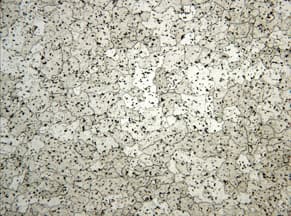
Tiny Dark Specks in Your Aluminum Sample — Embedded SiC, and How to Stop It
Those random dark dots on your polished Al, Pb, Sn, or Mg sample are loose silicon carbide grit ground into the surface. The fix is changing your grinding abrasive, not your polishing.
Read More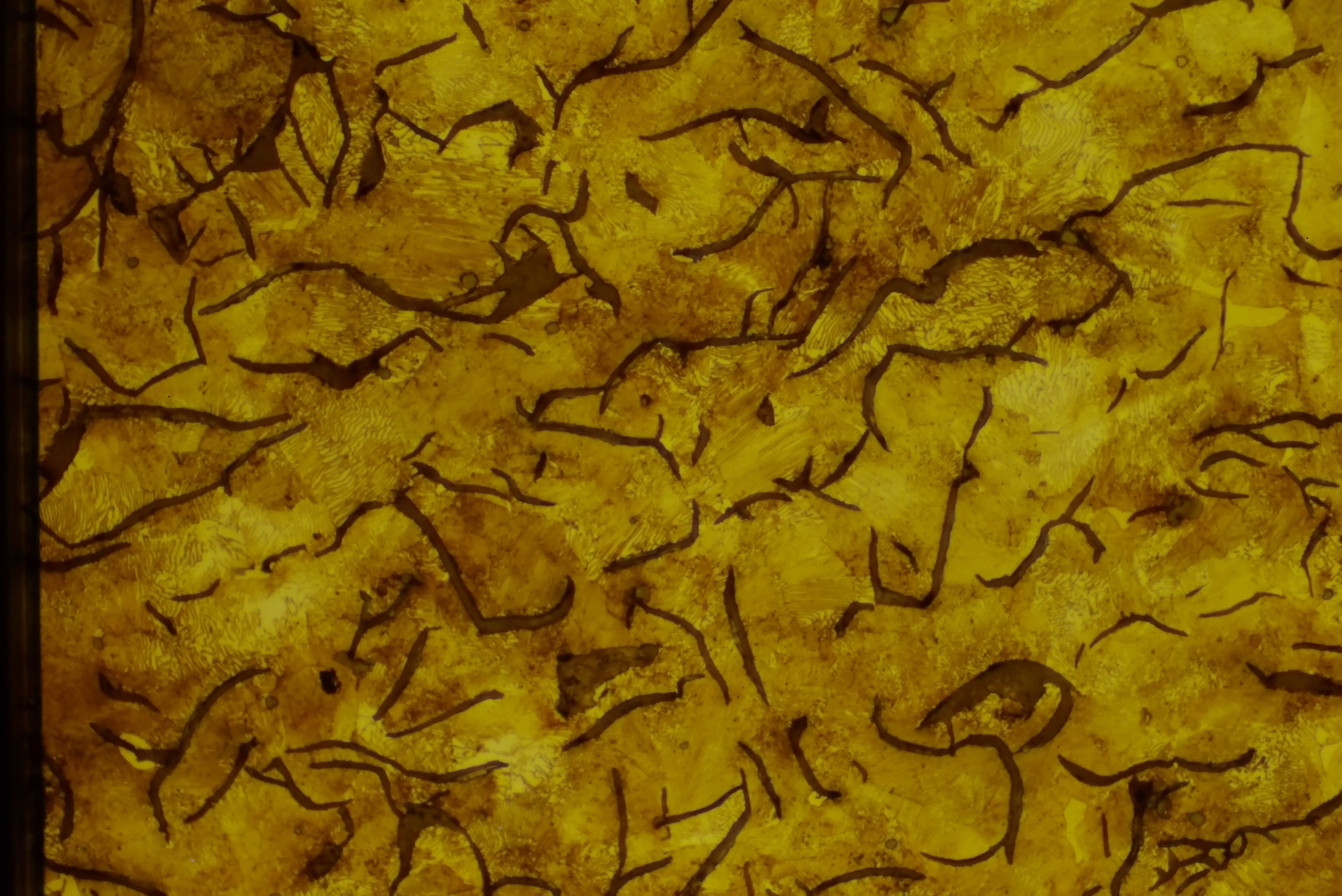
Comet Tails Behind Hard Particles — Diagnosing and Fixing Drag Damage
Comet tails are the visual signature of hard particles dragged across a soft matrix during polishing. The fix is force, rotation, and pad selection — not more polishing time.
Read More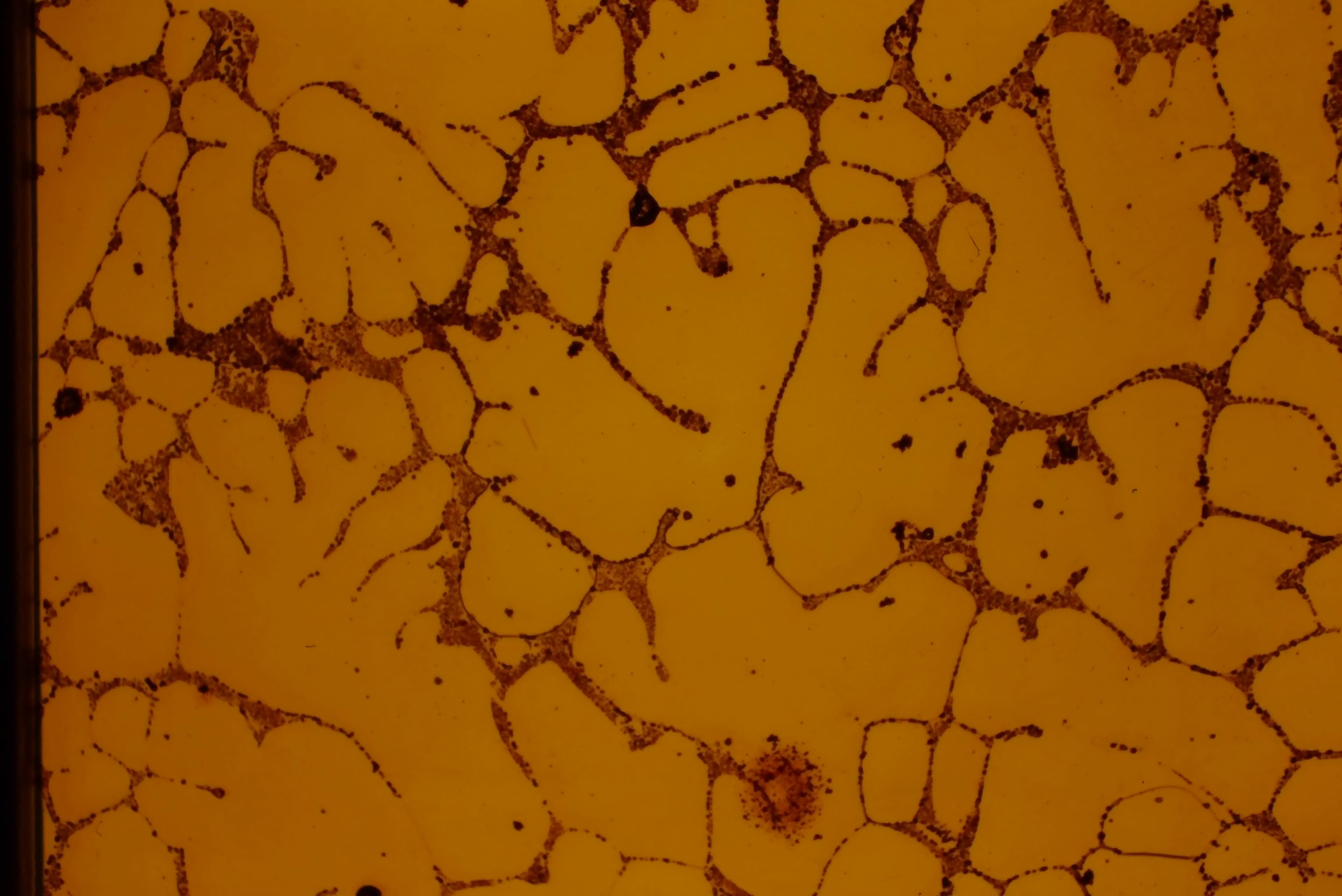
Mirror Finish, No Etch Reaction — The Smearing Problem in Soft Metals
When the surface is mirror-bright but the etchant refuses to reveal anything, you have a smeared subsurface layer. Mechanical polishing flattened the deformation but left it in place.
Read More