Purpose and Applications of Metallography
Discover the various applications of metallography in quality control, failure analysis, research, and materials development. Understand how metallographic analysis supports industry and scientific advancement.
Table of Contents
Introduction
Metallography is the science and art of preparing metal specimens for microscopic examination to reveal their internal structure, composition, and properties. It serves as a fundamental tool in materials science, engineering, and quality assurance, providing critical insights that cannot be obtained through other analytical methods.
While the name suggests it's limited to metals, modern metallographic techniques are also applied to ceramics, composites, polymers, and other engineering materials. The fundamental principles remain the same: prepare a sample to reveal its true microstructure, then examine and analyze it to understand the material's properties and processing history.
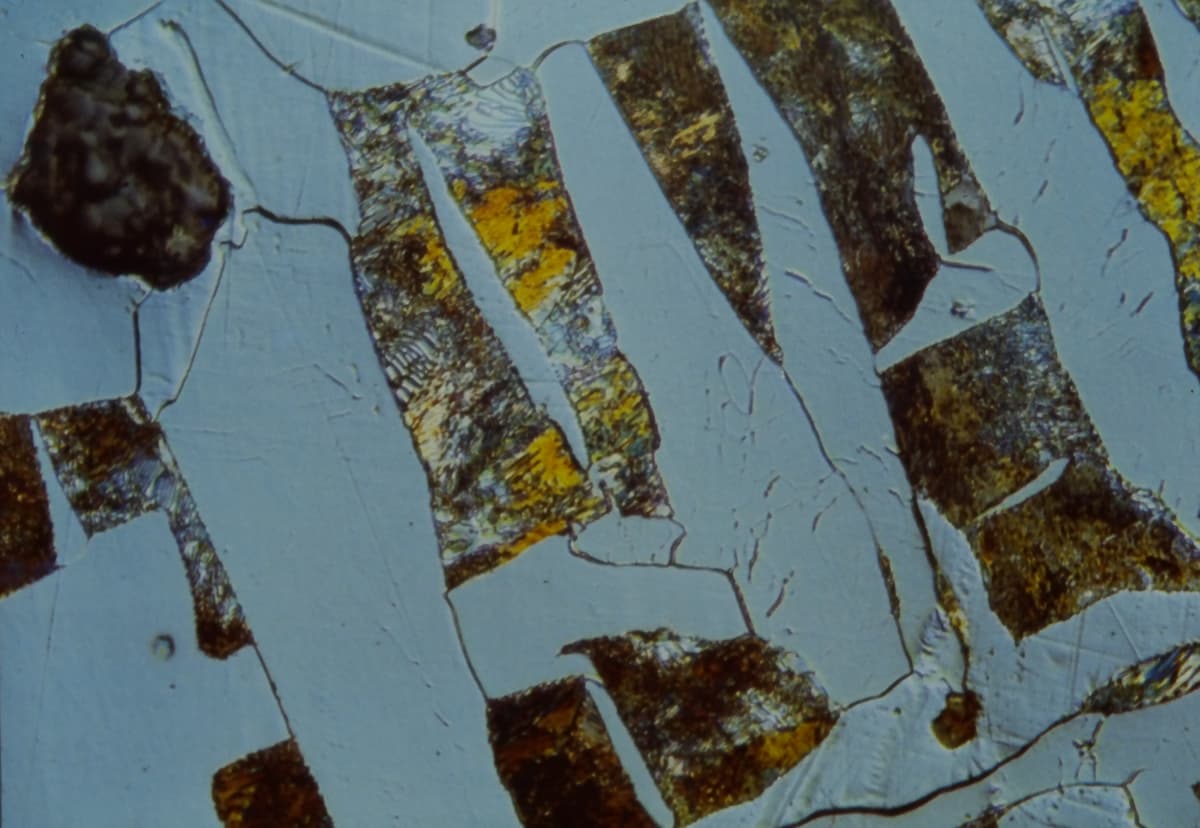
Metallographic analysis reveals the internal structure of materials, such as this ferrite-pearlite microstructure in steel, providing critical information about material properties and processing history.
The applications of metallography span across numerous industries and research fields. From ensuring the quality of manufactured components to investigating catastrophic failures, from developing new materials to optimizing manufacturing processes, metallography plays an indispensable role in modern materials science and engineering.
This guide explores the primary purposes of metallography and its diverse applications, helping you understand how this powerful analytical technique supports industry, research, and innovation.
Primary Purpose of Metallography
At its core, metallography serves to reveal and characterize the internal structure of materials at the microscopic level. The primary purposes include:
Microstructure Characterization
Metallography allows scientists and engineers to observe and quantify:
- Grain size and shape: Understanding the crystalline structure and its influence on material properties. Smaller grains generally increase strength and toughness.
- Phase distribution: Identifying different phases present in the material and their arrangement. Different phases have distinct properties and behaviors.
- Inclusions and impurities: Detecting non-metallic inclusions, voids, and contamination that can affect material performance.
- Defects and anomalies: Revealing cracks, porosity, segregation, and other structural defects that compromise material integrity.
- Heat treatment effects: Evaluating how thermal processing has altered the microstructure, such as the formation of martensite, bainite, or other transformation products.
Property-Structure Relationships
By correlating microstructure with mechanical, thermal, and chemical properties, metallography helps predict material behavior and performance. This understanding is essential for:
- Selecting appropriate materials for specific applications based on their microstructural characteristics
- Optimizing manufacturing processes to achieve desired microstructures and properties
- Predicting material performance under service conditions by understanding how microstructure responds to stress, temperature, and environment
- Understanding failure mechanisms by examining how microstructure influences crack initiation and propagation
Quality Verification
Metallography provides objective, visual evidence of material quality, processing history, and conformance to specifications. This makes it a key tool for quality assurance and certification processes.
Quality Control Applications
One of the most widespread applications of metallography is in quality control and quality assurance programs across manufacturing industries.
Incoming Material Inspection
Manufacturers use metallography to verify that incoming raw materials meet specifications:
- Checking grain size requirements according to material specifications
- Verifying heat treatment condition by examining the resulting microstructure
- Detecting undesirable phases or structures that could compromise performance
- Confirming material composition through microstructural analysis, as different compositions produce characteristic microstructures
In-Process Quality Monitoring
During manufacturing, metallographic analysis helps ensure processes are operating correctly:
- Monitoring heat treatment effectiveness by examining transformation products and microstructure uniformity
- Verifying welding quality and joint integrity, including the heat-affected zone (HAZ) microstructure
- Checking for proper grain refinement or recrystallization after deformation processes
- Detecting process-related defects early, such as inclusions, porosity, or improper phase formation
Final Product Verification
Before products reach customers, metallography confirms they meet all quality requirements:
- Verifying microstructure meets specifications and quality standards
- Checking for surface defects or contamination that could affect performance
- Confirming proper case depth in surface-hardened components (e.g., carburized or nitrided parts)
- Validating coating thickness and integrity, ensuring proper adhesion and coverage
Industry Example: In the aerospace industry, metallographic inspection is mandatory for critical components. Every batch of material and every critical part undergoes metallographic analysis to ensure it meets stringent quality standards before being used in aircraft. For more details, see our guide on Aerospace Applications of Metallography.
Failure Analysis Applications
When components fail in service, metallography is often the first and most important tool in determining the root cause. Failure analysis helps prevent future failures and improve product reliability.
Identifying Failure Mechanisms
Metallographic examination reveals the mode of failure:
- Fatigue failure: Characteristic crack propagation patterns and beach marks showing progressive failure under cyclic loading
- Brittle fracture: Cleavage facets and lack of plastic deformation, often associated with rapid, catastrophic failure
- Ductile failure: Dimpled fracture surfaces and evidence of plastic deformation, indicating material yielded before failure
- Corrosion failure: Pitting, intergranular attack, or stress corrosion cracking revealed through microstructural examination
- Overheating: Microstructural changes indicating excessive temperature exposure, such as excessive grain growth or phase transformations
Root Cause Analysis
By examining the microstructure at and near the failure site, metallographers can determine:
- Whether the material met specifications
- If manufacturing defects contributed to failure
- Whether improper heat treatment or processing occurred
- If service conditions exceeded design limits
- Whether material degradation occurred over time
Preventive Action
The insights gained from failure analysis enable:
- Design improvements to prevent similar failures
- Process modifications to eliminate manufacturing defects
- Material selection changes for better performance
- Service condition recommendations
- Maintenance schedule adjustments

Inclusions and defects revealed through metallography can be the root cause of material failures. Identifying these issues helps prevent future failures and improve product reliability.
Research and Development Applications
Metallography is fundamental to materials research, enabling scientists to understand material behavior and develop new technologies.
Fundamental Research
Researchers use metallography to study:
- Phase transformations and kinetics, understanding how and when different phases form
- Grain growth mechanisms and how processing conditions affect grain size evolution
- Recrystallization behavior after deformation, critical for understanding work hardening and annealing
- Deformation mechanisms, including how dislocations and other defects move through the material
- Diffusion processes that control phase transformations and chemical changes
- Nucleation and growth phenomena that determine microstructure development
Process Development
When developing new manufacturing processes, metallography helps:
- Optimize processing parameters
- Understand process-structure relationships
- Validate process models and simulations
- Identify process windows for desired microstructures
- Troubleshoot process issues
Technology Development
Metallography supports the development of new technologies:
- Additive manufacturing (3D printing) process optimization
- Advanced joining techniques (friction stir welding, electron beam welding)
- Surface modification technologies
- Nanostructured materials development
- Composite material characterization
Specialized Applications: Beyond industrial and research applications, metallography is also used in forensic investigations to analyze failed components in legal cases, archaeological studies to understand ancient metalworking techniques, and conservation efforts to preserve historical metal artifacts. These specialized applications demonstrate the versatility and importance of metallographic analysis across many fields.
Materials Development Applications
Developing new materials with improved properties requires understanding how composition and processing affect microstructure. Metallography plays a key role throughout this process.
Alloy Development
When developing new alloys, metallographers:
- Characterize phase diagrams and phase stability
- Optimize composition for desired properties
- Study precipitation behavior
- Evaluate strengthening mechanisms
- Assess workability and formability
Heat Treatment Optimization
Developing optimal heat treatment cycles requires:
- Determining transformation temperatures
- Optimizing time-temperature parameters
- Evaluating quench sensitivity
- Assessing tempering response
- Minimizing distortion and residual stress
Property Enhancement
Metallography helps identify microstructural features that enhance specific properties:
- Strength: Grain refinement, precipitation hardening, martensitic transformation
- Toughness: Microstructure control, inclusion management, and phase balance
- Corrosion resistance: Phase distribution, grain boundary chemistry, and protective layer formation
- Wear resistance: Hard phase distribution, surface modification, and microstructure optimization
- Fatigue resistance: Microstructure homogeneity, defect minimization, and residual stress control
Process Control Applications
Metallography provides real-time feedback for controlling manufacturing processes, ensuring consistent product quality and optimizing production efficiency.
Heat Treatment Monitoring
Regular metallographic checks during heat treatment operations:
- Verify furnace temperature uniformity by examining microstructure consistency across samples
- Confirm proper atmosphere control, detecting surface oxidation or decarburization
- Monitor quench effectiveness by examining transformation products and hardness gradients
- Detect decarburization or oxidation through microstructural changes at the surface
- Ensure consistent case depth in carburizing and other surface hardening processes
Welding Process Control
In welding operations, metallography helps:
- Verify weld penetration and fusion, ensuring complete joint filling
- Check for proper heat-affected zone (HAZ) microstructure, avoiding undesirable phase transformations
- Detect weld defects such as cracks, porosity, and inclusions
- Validate post-weld heat treatment effectiveness in restoring desired microstructure
- Optimize welding parameters based on microstructural observations
Castings and Foundry Control
Foundries use metallography to:
- Control solidification structure to achieve desired properties
- Monitor grain size and dendrite arm spacing, which affect mechanical properties
- Detect casting defects such as shrinkage, porosity, and inclusions
- Verify heat treatment effectiveness in modifying as-cast microstructure
- Optimize casting parameters based on microstructural analysis
Forging and Forming
Metallography supports forging and forming operations by:
- Monitoring recrystallization and grain growth during and after deformation
- Detecting flow lines and fiber orientation, which affect anisotropic properties
- Verifying proper deformation and work hardening through microstructural changes
- Ensuring uniform microstructure throughout the part, avoiding localized variations
Industry-Specific Applications
Different industries have unique requirements and challenges for metallographic analysis. Understanding industry-specific applications helps metallographers tailor their approach to meet particular standards, regulations, and quality requirements.
Aerospace Industry
The aerospace industry has some of the most stringent metallographic requirements due to the critical nature of aircraft components. Metallography in aerospace applications includes:
- Titanium and superalloy preparation and analysis
- Fatigue and creep damage assessment
- Coating and surface treatment verification
- Compliance with AMS (Aerospace Material Specifications) standards
- Failure analysis of critical flight components
For comprehensive guidance on aerospace metallography, see our Aerospace Applications Guide.
Automotive Industry
The automotive industry relies heavily on metallography for quality control and process optimization. Key applications include:
- Steel and aluminum processing verification
- Heat treatment validation for engine and transmission components
- Weld quality assessment in body structures and frames
- Case depth verification for surface-hardened parts
- Compliance with SAE (Society of Automotive Engineers) specifications
Learn more about automotive metallography in our Automotive Applications Guide.
Medical Device Industry
Medical device manufacturing requires specialized metallographic techniques to ensure biocompatibility and regulatory compliance. Applications include:
- Biocompatible material preparation (titanium, stainless steel, cobalt-chromium alloys)
- Surface finish requirements for implants
- Implant material characterization and verification
- Regulatory compliance documentation (FDA, ISO 13485)
- Failure analysis of medical devices
For detailed information on medical device metallography, see our Medical Device Applications Guide.
Other Industries
Metallography is also essential in many other industries, including:
- Power generation: Analysis of turbine blades, boiler tubes, and pressure vessels
- Oil and gas: Pipeline and drilling equipment analysis, corrosion assessment
- Electronics: PCB and semiconductor chip preparation (see our PCB and Chip Preparation Guide)
- Additive manufacturing: Process optimization and quality control for 3D-printed components
- Welding and fabrication: Weld quality verification and procedure qualification
Standards and Certification Applications
Many industries require metallographic analysis to demonstrate compliance with standards and obtain certifications. This ensures materials and components meet regulatory and industry requirements.
Industry Standards Compliance
Metallography is required by numerous standards organizations:
- ASTM: Standards for grain size, inclusion rating, microstructure evaluation
- ISO: International standards for material characterization
- ASME: Pressure vessel and boiler code requirements
- SAE: Automotive material specifications (see our Automotive Applications Guide)
- AMS: Aerospace material specifications (see our Aerospace Applications Guide)
Certification Requirements
Many certifications require metallographic documentation:
- Material certifications for critical applications
- Welding procedure qualifications
- Heat treatment process certifications
- Supplier quality approvals
- Product certifications for regulated industries
Documentation and Traceability
Metallographic analysis provides:
- Permanent visual records of material condition
- Evidence of compliance with specifications
- Historical data for quality tracking
- Supporting documentation for audits
- Legal evidence in disputes or claims
Important: Proper documentation of metallographic analysis is critical. Maintain detailed records including sample identification, preparation methods, etchingprocedures, and microstructural observations. These records may be required for certification, audits, or legal purposes. Many standards, such as ASTM E883, provide guidance on proper documentation practices.
Conclusion
Metallography serves as a cornerstone of modern materials science and engineering, with applications spanning from fundamental research to industrial quality control. Its ability to reveal the internal structure of materials makes it indispensable for:
- Ensuring product quality and reliability
- Investigating failures and preventing recurrences
- Developing new materials and processes
- Controlling manufacturing operations
- Meeting industry standards and certifications
- Advancing scientific understanding
Whether you're working in quality control, failure analysis, research and development, or process optimization, understanding the purpose and applications of metallography is essential for effective materials characterization and analysis.
As you work with metallography, remember that proper sample preparation is fundamental to obtaining meaningful results. The quality of your metallographic analysis depends directly on the quality of your sample preparation techniques, from sectioning and mounting through grinding, polishing, and etching.
Key Equipment for Metallography
To perform metallographic analysis, you'll need proper equipment for sample preparation and examination. Here are the key tools:

Metallurgical Microscopes
High-quality microscopes with reflected light capabilities are essential for examining prepared metallographic samples and revealing microstructures.
View Microscopes →
Grinder Polishers
Proper grinding and polishing equipment is needed for preparing samples that reveal true microstructures without artifacts or damage.
View Grinder Polishers →Ready to Get Started with Metallography?
Now that you understand the purpose and applications of metallography, explore our comprehensive guides to learn the techniques needed for proper sample preparation.